§ How-To
Circular Saw Blade Stuck? Safe Removal and Replacement Tips
A seized saw blade nut is stressful. Here's how to remove it safely without damaging your saw — plus blade selection tips.
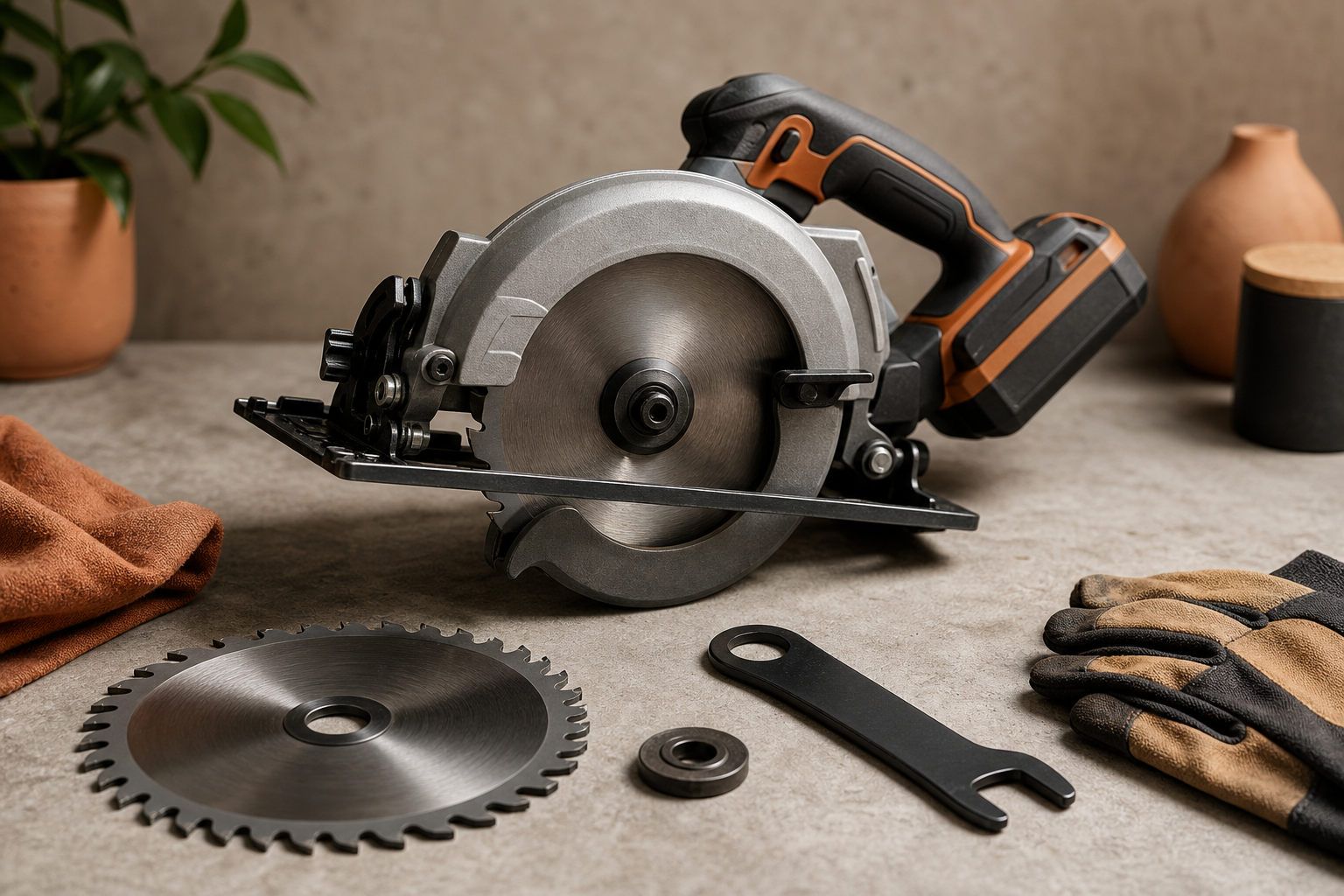
A stuck circular saw blade is one of those problems that catches a lot of owners off guard. You go to swap a dull blade, hit the arbor bolt with the wrench, and nothing moves—or worse, the blade seems locked in place no matter what you try. This question comes up often in online communities and owner forums, especially from users working on DeWalt, Craftsman, and Makita saws. The good news is that most stuck-blade situations come down to a few predictable causes, and they can usually be handled safely with the right process.
Before doing anything, unplug a corded saw or remove the battery from a cordless model. Blade changes are simple maintenance, but they need to be treated like any other repair around a sharp cutting tool.
Why circular saw blades get stuck
In most cases, the blade itself is not really “fused” to the saw. What is stuck is either the arbor bolt, the outer flange, or the blade binding against debris and pressure on the arbor.
Here are the most common reasons:
1. The arbor bolt is being turned the wrong direction
This is probably the number one cause behind “impossible” blade removal. Not every circular saw loosens in the same direction you expect. Many sidewinder saws use a reverse-thread arbor bolt so blade rotation helps keep the bolt tight during use. That means owners sometimes pull harder in the tightening direction without realizing it.
Always confirm the loosening direction in your manual or on the blade guard/arbor area if marked.
2. Resin, pitch, rust, or packed sawdust
If you cut a lot of treated lumber, plywood, or resinous wood, sticky buildup can collect around the blade, flange, and arbor. Over time, that buildup acts like glue. A little surface rust from storage in a damp garage can do the same thing.
3. Over-tightening during the last blade change
A circular saw arbor bolt does not need extreme force. If the previous install was done with too much torque—or with an impact driver, which should never be used here—the next removal can be much harder than normal.
4. Blade heat and expansion
A blade that has been worked hard can heat up and expand slightly. If you try to remove it immediately after a long cut session, the flange and bolt may feel much tighter than usual.
5. Worn or damaged flange parts
If the outer washer/flange is burred, warped, or damaged, it may not release cleanly from the blade. This is less common, but it does happen, especially on heavily used jobsite saws.
Safe diagnosis before you force anything
When a blade will not come off, the safest approach is to slow down and identify exactly what is stuck. Forcing the wrench is how blade locks get broken, knuckles get cut, and arbor hardware gets damaged.
Follow these checks:
Step 1: Disconnect power
Remove the battery or unplug the saw. Verify the trigger cannot be activated.
Step 2: Engage the spindle or arbor lock correctly
Most modern circular saws have a spindle-lock button. Press it and slowly rotate the blade by hand until the lock fully engages. If the lock is only partially engaged, it can slip or be damaged when torque is applied.
Step 3: Confirm bolt direction
This matters more than many owners realize. Check your manual. On some saws, you loosen the bolt by turning it in what feels like the “wrong” direction. If you are unsure, stop and confirm before applying more pressure.
Step 4: Inspect for visible debris
Retract the blade guard and look around the flange, arbor, and blade center hole. Packed sawdust, pitch, and corrosion around the hub area are strong clues.
Step 5: Let a hot saw cool down
If the saw was just used, give it time to cool. Metal parts often release more easily once temperatures return to normal.
Step 6: Evaluate the wrench and bolt head
If the wrench is slipping, the wrong size, or the bolt head is already rounding over, address that before continuing. A damaged bolt can turn a simple blade change into a parts replacement job.
If your flange, arbor bolt, blade lock, or replacement wrench is worn or damaged, compatible replacement parts are available on this site for many popular circular saw models.
The safe way to remove and replace a stuck circular saw blade
Once you have confirmed power is disconnected and the spindle lock is engaged properly, use this process.
1. Start with controlled pressure, not brute force
Use the factory wrench or a correct-fitting wrench. Hold the saw securely on a bench or floor and apply steady pressure in the proper loosening direction. Avoid jerking the tool. Sudden force is more likely to strip the bolt or damage the lock.
2. Use penetrating oil carefully if the bolt or flange is seized
If rust or pitch buildup is likely, place a small amount of penetrating oil on the arbor bolt and around the flange contact area. Do not soak the saw. Let it sit for 10–15 minutes, then try again. Wipe away excess oil afterward so it does not contaminate the blade or work surface.
3. Clean the flange area once the bolt is out
After the arbor bolt loosens, remove the outer flange and blade. If the blade still seems stuck on the arbor, gently wiggle it free while holding the guard open. Do not pry aggressively against the guard or housing.
Clean the arbor, inner flange, outer flange, and bolt threads with a rag and a nylon brush. Remove pitch, dust, and rust. This step is important because the buildup that caused today’s problem is often still sitting there.
4. Inspect parts before installing the new blade
Look for:
- Rounded or damaged arbor bolt head
- Cracked or bent flange washer
- Excessive wear on the spindle-lock mechanism
- Blade bore damage
- Warped or heat-blued old blade
If any mounting hardware is questionable, replace it. A blade is only as secure as the parts holding it.
5. Install the blade in the correct orientation
Match the blade rotation arrow to the saw’s rotation direction. This is another common point of confusion in owner forums. A backwards blade cuts poorly and can create extra strain and unsafe operation.
6. Reinstall the flange and tighten correctly
Thread the bolt by hand first to avoid cross-threading. Engage the spindle lock, then tighten the bolt firmly—but not excessively. Think snug and secure, not maximum force. The saw’s normal rotation helps maintain tightness in use.
7. Test the saw before cutting
Spin the blade by hand to confirm free movement and proper seating. Restore power, then run the saw briefly with no load. Listen for wobble, scraping, or vibration before returning to work.
If the arbor bolt is rounded, the spindle lock is broken, or the flange will not release even after cleaning and oil, that is when replacement hardware becomes the right fix. This site carries compatible circular saw replacement parts that can save a saw that is otherwise in good working shape.
Watch: Video walkthrough
A visual walkthrough can make blade orientation, spindle-lock use, and bolt direction much clearer—especially if this is your first blade change on a DeWalt-style saw.
Prevention tips so the next blade change is easy
The best fix for a stuck blade is preventing the next one.
Clean the arbor area regularly
Every few blade changes, wipe down the arbor, flanges, and bolt. If you cut resinous material often, clean more frequently.
Do not overtighten the arbor bolt
This is a common mistake. Tight enough to secure the blade is enough. Over-tightening creates future service problems without improving safety.
Avoid using power tools to tighten or loosen the bolt
An impact driver or drill can damage threads, flange surfaces, and the spindle-lock system.
Change blades after the saw cools
A cool saw is easier to service, and you are less likely to get a false sense that parts are seized when they are only heat-tightened.
Store the saw in a dry place
Moisture promotes rust on the bolt, flange, and blade bore area. Dry storage helps the entire blade-mount system release properly later.
Replace worn mounting hardware before it fails
A damaged flange or bolt can lead to poor blade seating, vibration, and hard removal. If the parts look questionable, replace them proactively. Compatible parts for many circular saw models are available on this site, making routine maintenance much simpler.
FAQ
Why won’t my circular saw blade bolt loosen?
Usually because the bolt is being turned the wrong direction, the spindle lock is not fully engaged, or resin/rust has seized the flange and threads.
Can I use an impact driver to remove a stuck blade bolt?
It is not recommended. Impacts can damage the arbor bolt, threads, flange, or spindle-lock mechanism. Controlled hand pressure is much safer.
How tight should a circular saw blade bolt be?
Firm and secure, but not overly tight. Thread it by hand first, then snug it with the wrench while the spindle lock is engaged. Excessive force only makes the next blade change harder.
Find the right part on Amazon
Check price, stock and fitment — ships direct from Amazon.
§ Catalog
Shop the catalog